RIGHT TO INFORMATION ACT, 2005
Objective of the Right to Information Act
The Government of India has enacted ‘the Right to Information Act 2005’ to provide for setting out the practical regime of right to information for citizens to secure access to information under the control of Public Authorities. The basic objective of the Right to Information Act is to empower the citizens, promote transparency and accountability in the working of the Public Authorities, contain corruption, and make our democracy work for the people in real sense.
What is Information
Information is any material in any form. It includes records, documents, memos, e-mails, opinions, advices, press releases, circulars, orders, logbooks, contracts, reports, papers, samples, models, data material held in any electronic form. It also includes information relating to any private body which can be accessed by the public authority under any law for the time being in force.
What is Right to Information
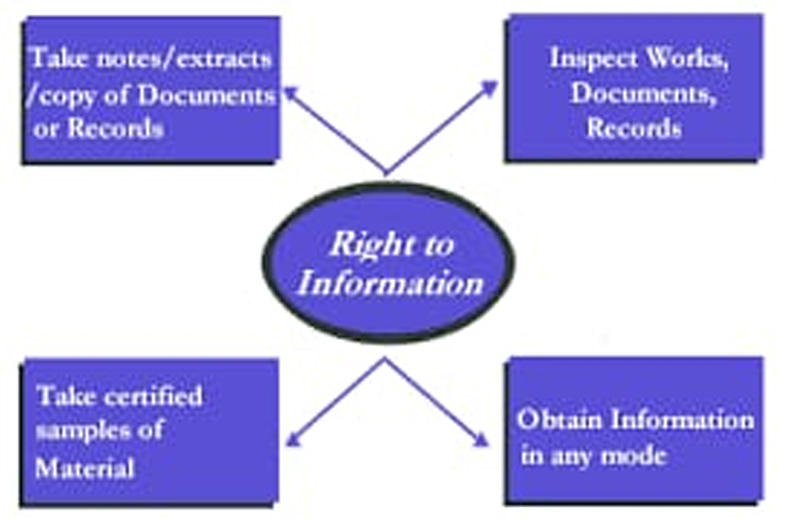
The right to information includes an access to the information which is held by or under the control of any public authority and includes the right to inspect the work, document, records, taking notes, extracts or certified copies of documents / records and certified samples of the materials and obtaining information which is also stored in electronic form.
Who can Seek information
Section 3 of the Right to Information Act provides as under: “Subject to the provisions of this Act, all citizens shall have the right to information.” - Normally, an applicant is not required to submit any proof of citizenship. However, if the CPIO has any doubt about the identity of the applicant he can seek for his proof of identification. The Act gives the right to information only to the citizens of India. It does not make provision for giving information to Corporations, Associations, and Companies etc. which are legal entities / persons but not citizens. However, if an application is made by an employee or office bearer of any Corporation, Association, Company, NGO etc. indicating his name and such employee or office bearer is a citizen of India, information may be supplied to him / her. In such cases, it would be presumed that a citizen has sought information at the address of the Corporation.
What is a Public Authority
A “public authority” is any authority or body or institution of self government established or constituted by or under the Constitution; or by any other law made by the Parliament or a State Legislature; or by notification issued or order made by the Central Government or a State Government. The bodies owned, controlled or substantially financed by the Central Government or a State Government and non-Government organizations substantially financed by the Central Government or a State Government also fall within the definition of public authority. State Bank of India is a Public Authority.

Dr.B.Keshavulu- M.tech ph.D
Founder & National Chairman
Working with team to develop specifications, implementation.
For most people, growing older means that there are times when you find it difficult to manage with day-to-day living activities. You may realise you need help, or you may be caring for a friend or family member who needs help, but you just don't know where to start or what help you can get.
Services
We are fully equipped and trained to design and execute effective work and provide efficient Exhibition,

Right To Information (RTI)
Right to Information (RTI) is an act of the Parliament of India which sets out the rules and procedures regarding citizens' right to information. It replaced the former Freedom of Information Act, 2002. Under the provisions of RTI Act, any citizen of India may request information.
Right To Safety
Means right to be protected against the marketing of goods and services, which are hazardous to life and property. The purchased goods and services availed of should not only meet their immediate needs, but also fulfil long term interests.of the right to information of telangana state

Right To Choice
In the context of feminist theory, the right to choice refers to the right of a woman to reproductive freedom. ... The Consumer Protection Act describes the right to choice as the right to be assured, wherever possible, access to a variety of goods and services at competitive prices.

Right To Be Heard
RTI is a fundamental right for every citizen of India. The authorities under RTI Act 2005 are called quasi-judicial authorities. This act was enacted in order to consolidate the fundamental right in the Indian constitution 'freedom of speech'. Since RTI is implicit in the Right to Freedom of Speech and Expression under Article 19 of the Indian Constitution.
Right To Consumer Education
Consumer education is a right that protects the consumer from large companies that sell products and services. According to the consumer rights bill that was established during President John F. Kennedy's term, consumers have the right to know more about the products that they purchase. these are provided by the RTI of telangana state.

Right To Healthy Environment
Everyone has the right to an adequate environment. An adequate environment is considered a precondition for the realization of other human rights including rights to life, food, health and an adequate standard of living. ... Everyone should be able to live in an environment conducive for their health and well-being.
Gallery
Workshop Gallery




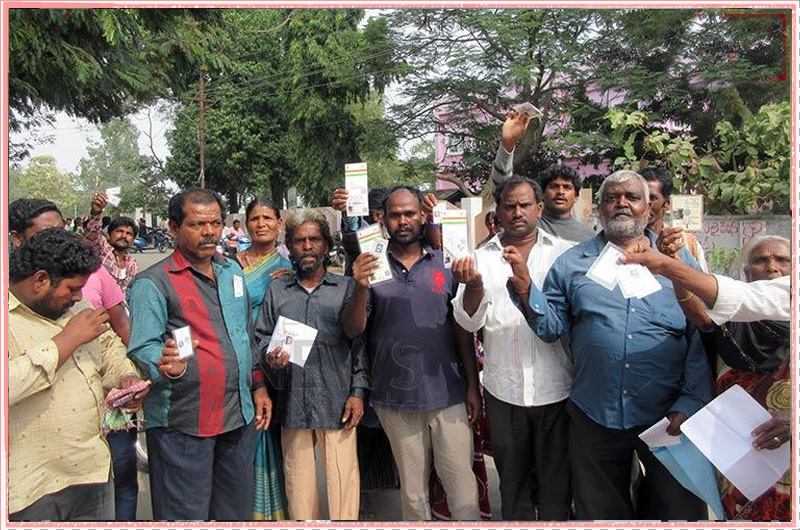

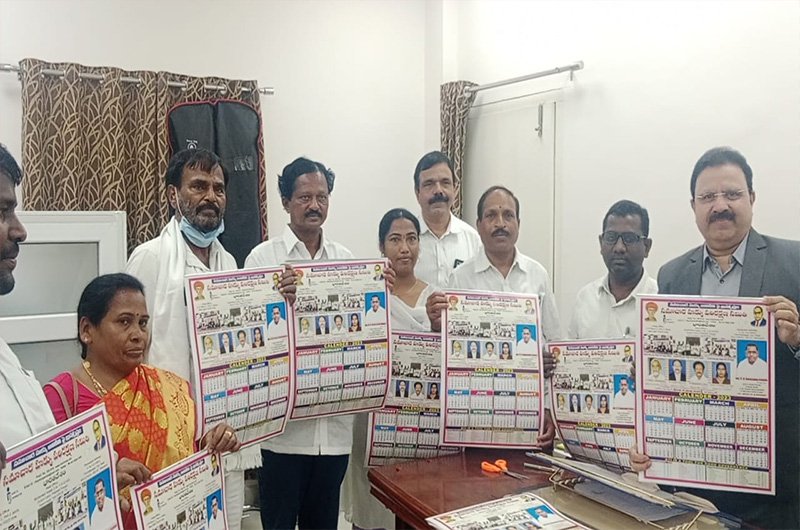
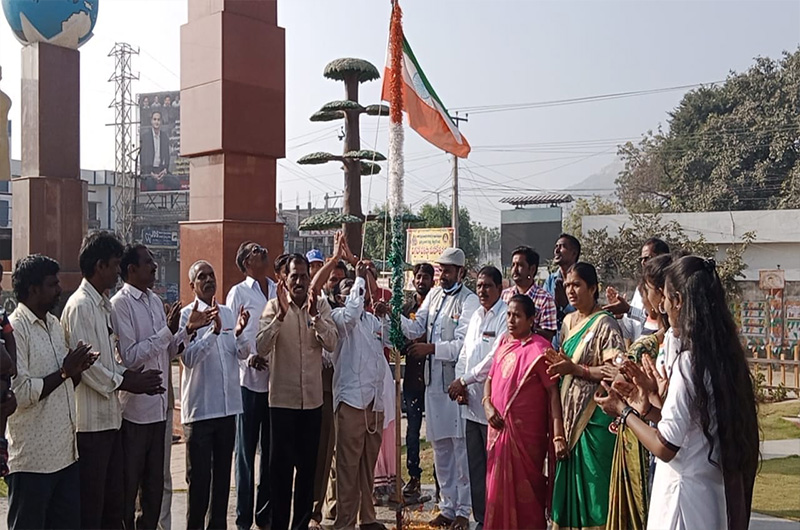
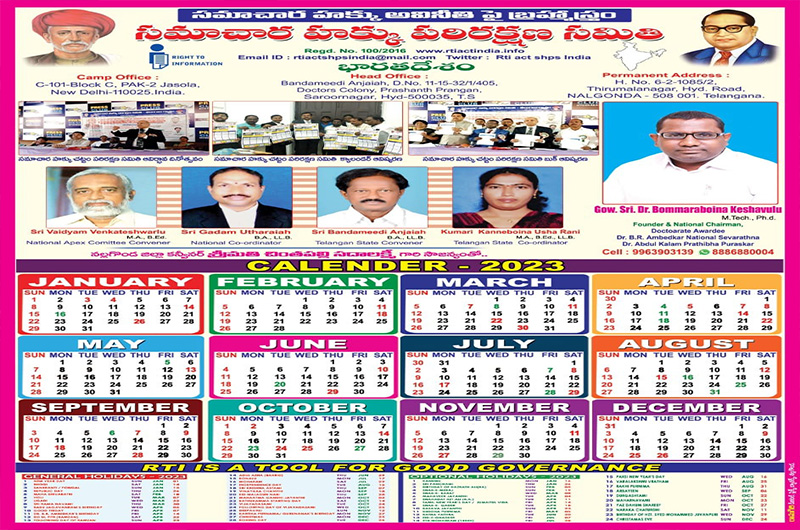

Lorem Ipsum generators on the Internet tend to repeat predefined chunks as necessary,
making this the first true generator on the Internet..
Lorem Ipsum
Lorem Ipsum Group

Lorem Ipsum generators on the Internet tend to repeat predefined chunks as necessary,
making this the first true generator on the Internet.
Lorem Ipsum
Lorem Ipsum Group

Lorem Ipsum generators on the Internet tend to repeat predefined chunks as necessary,
making this the first true generator on the Internet.
Lorem Ipsum
Lorem Ipsum Group
Contact
We Love Pretty Much To Here From You
Our Address
Head Office :
Bandamidi Anjaiah, D.No. 11-15-32/1/405,
Doctors Colony, Prashanth Prangan,
Saroornagar, Hyderabad - 500035, Telangana.
Camp Office :
C-101 -Block C PAK-2 Jasola, New Delhi - 110025. India.
Permanent Address :
H.No. 6-2-1085/2, Thirumalanagar,
Hyd. Road, Nalgonda - 508 001. Telangana.
Contact Details :
+91 99639 03139 , +91 88868 80004
rtiactshps@gmail.com